

Ranked Choice Voting (RCV) Simplified
Are you confused about Ranked Choice Voting?
You are not alone! We’ve created this guide to simplify your vote.
Maine uses Ranked Choice Voting (RCV) for federal elections, primary elections (including upcoming Gubernatorial Primary on Tuesday, June 9th), and certain state elections. Instead of choosing just one candidate, voters can rank candidates in order of preference:
1st choice
2nd choice
3rd choice
And so on
How the counting works
Let's say there are four candidates:
Candidate A
Candidate B
Candidate C
Candidate D
And the first-round results are:
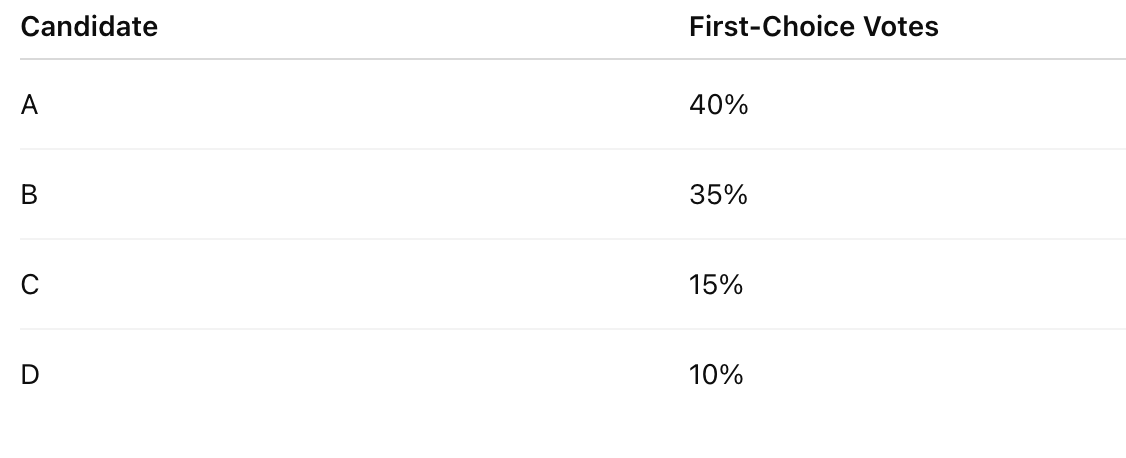
Since nobody has more than 50%, the candidate with the fewest votes (D) is eliminated.
The ballots that ranked D first are then reviewed. Those specific votes are transferred to whichever remaining candidate was ranked next on those specific ballots.
After redistribution:
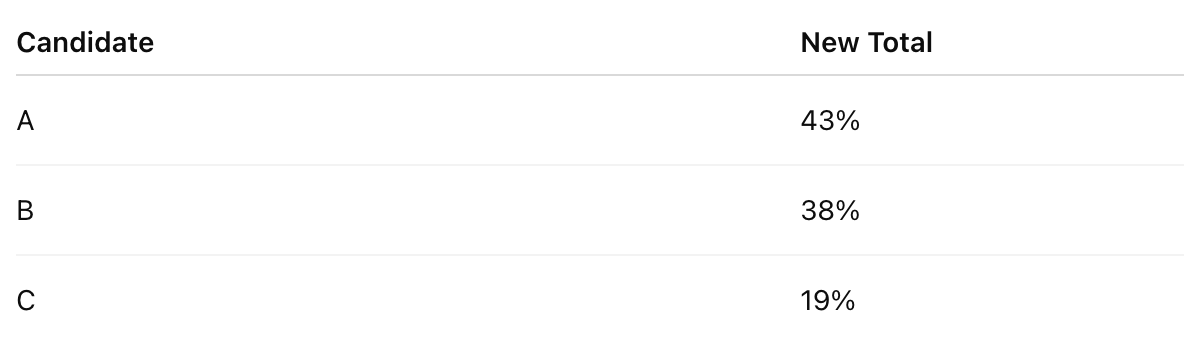
Still no majority, so C is eliminated. Those ballots are redistributed according to the next available ranking.
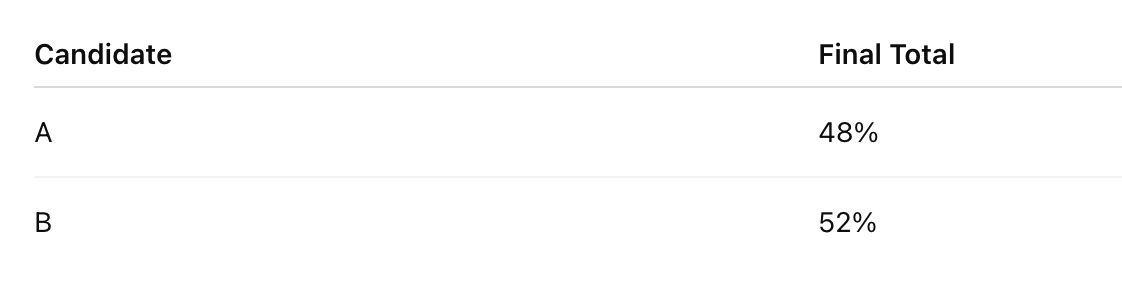
Final round: Candidate B wins because they reached a majority after the transfers.
What if I only vote for one candidate?
Whether you rank only your first-choice candidate or attempt to select the same candidate in multiple ranking columns,your ballot will count only once for that candidate.
If your chosen candidate is eliminated and you have not ranked any other candidates, your ballot will not be counted in subsequent rounds of tabulation.
Where Does Maine use RCV?
Maine currently uses ranked choice voting for:
General elections for the U.S. House and U.S. Senate.
Presidential elections.
Primary elections for state and federal offices.
Certain special elections.
It is not used for Maine gubernatorial general elections or Maine Legislature general elections because of provisions in the Maine Constitution requiring those offices to be decided by plurality vote.
Simple example
Imagine your vote looks like this:
Ortiz
Brady
Bird
left blank
If Ortiz is eliminated, your vote automatically moves to Brady. If Brady is later eliminated, it moves to Bird.
If Bird is eliminated, then your ballot is “exhausted” because all of your ranked choices have been eliminated.
Your ballot continues counting until either:
One of your ranked candidates wins, or
You run out of ranked candidates.
That's the core idea: instead of voting again in a runoff election, your backup choices are already built into your ballot.